mAh vs Wh for Power Banks, What Actually Matters?
If you are comparing power banks, mAh is only part of the story, and Wh is usually the number that better explains real capacity once voltage enters the picture
Quick Take
- mAh is easy to market, but Wh is usually the cleaner number for comparing real battery size.
- The part people miss is voltage. A lot of power banks live around 3.6V to 3.7V, which is why 10,000mAh often works out to about 37Wh.
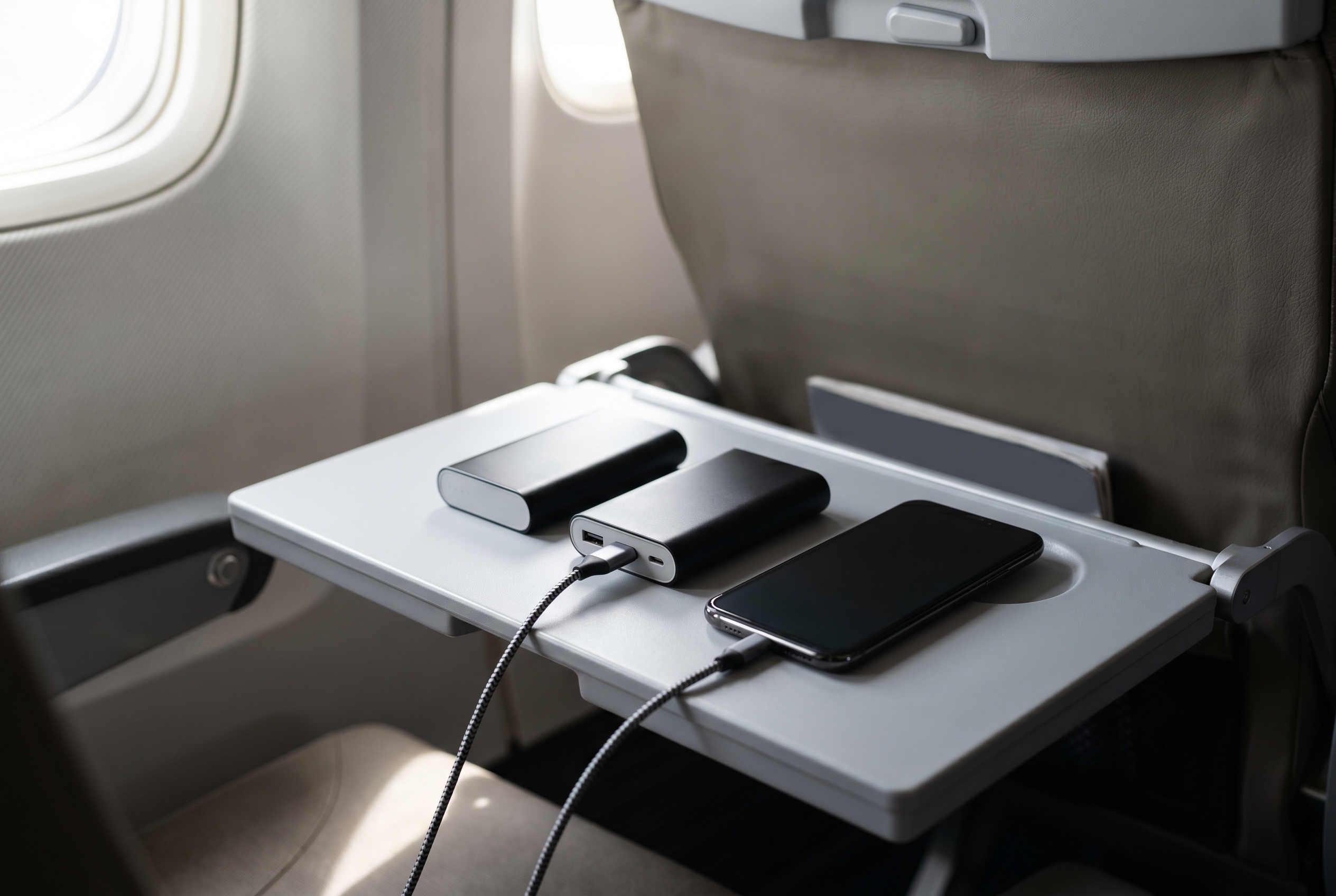
If you want the short answer, Wh matters more than mAh when you are trying to understand how much energy a power bank really holds.
That does not mean mAh is useless. It just means mAh is the number people see most often, while Wh is usually the better number for comparing different battery systems and understanding airline rules.
What mAh Means
mAh stands for milliamp-hours. It is a measure of electrical charge.
That is why brands love using it. A number like 10,000mAh or 20,000mAh looks big and easy to compare at a glance.
The catch is that mAh does not tell the full story by itself unless you also know the battery voltage. Two batteries can have different voltages, which means the same mAh number does not always mean the same total energy.
What Wh Means
Wh stands for watt-hours. It is a measure of stored energy.
For power banks, that usually makes Wh the more useful real-world number. It gives you a cleaner way to compare how much total energy a battery actually has instead of just how much charge it holds at a given voltage.
It is also the number that matters most for flight rules. Airlines and regulators usually talk about battery limits in watt-hours, not mAh.
The Simple Conversion
The basic conversion is:
Wh = (mAh × V) / 1000
So if a power bank is rated at 20,000mAh and the battery pack voltage is 3.7V, the math looks like this:
(20,000 × 3.7) / 1000 = 74Wh
That is why a 20,000mAh power bank is usually around 74Wh, not some magical giant number just because the mAh figure looks huge.
The Voltage Part Most People Miss
This is the part that usually clears everything up.
A lot of power banks use lithium-ion cells with a nominal voltage in roughly the 3.6V to 3.7V range. Battery University notes that lithium-ion is commonly rated at 3.60V per cell, while some manufacturers mark cells at 3.70V or a little higher.
That is why the classic power-bank math so often looks like this:
- 10,000mAh × 3.7V = 37Wh
- 20,000mAh × 3.7V = 74Wh
- 27,000mAh × 3.7V = 99.9Wh
That last example is also why so many travel-friendly power banks cluster just under the 100Wh flight threshold.
But 3.7V is not a universal constant. Real products do vary a bit.
For example, Anker currently lists:
- Anker Prime Power Bank (20K, 220W) at 20,100mAh (72.36Wh)
- Anker Prime Power Bank (26K, 300W) at 26,250mAh (99.75Wh)
Those numbers land a little closer to the 3.6V to 3.8V neighborhood than a perfect 3.7V line.
So the simplest way to think about it is this: 3.7V is a very common shorthand for power-bank math, but you should still check the actual Wh rating when a product gives it to you.
Why This Confuses People
A lot of confusion comes from brands advertising the bigger-looking mAh number while people are trying to answer a different question.
Usually the real question is one of these:
- How big is this power bank really?
- How does it compare to another one?
- Will it be allowed on a flight?
- How many times will it charge my phone?
For the first three questions, Wh is usually the cleaner number.
For the last one, neither number gives a perfect answer on its own because charging losses, voltage conversion, and device battery size all affect the real result.
Which Number Should You Pay Attention To?
If you are comparing power banks in the same general category, mAh is fine as a quick shorthand.
But if you want the better technical comparison, or you are trying to understand airline rules, look for Wh first.
That is especially true once you get into bigger batteries, travel power stations, or anything where flight restrictions start to matter. For example, many travel battery rules draw the important line at 100Wh, not at some mAh number.
The TrekSavvy Version
Here is the easiest way to think about it:
- mAh is the marketing-friendly number most people recognize
- Wh is the more useful number for total energy and airline limits
- if you only look at mAh, you are missing part of the picture
If you are shopping for a travel battery and want the cleaner way to compare size and legality, start with Wh, then use the rest of the specs to decide whether the shape, ports, and charging speed actually fit your setup.
To apply that math to actual products, see our best Anker travel charging gear.