Anker Travel Charging Station Review: A Disappointing Design
Anker's slim 150W Travel Charging Station looks made for a carry-on, but its six-port layout wastes space on two slow USB-A ports and leaves us wanting more power
Quick Take
- The flat shape and four USB-C ports are useful, but 150W shared feels light for a charger this large
- We would trade both 12W USB-A ports for a smaller body or more USB-C power
- At roughly this size, Belkin's 70W Travel Power Strip is the more versatile travel companion
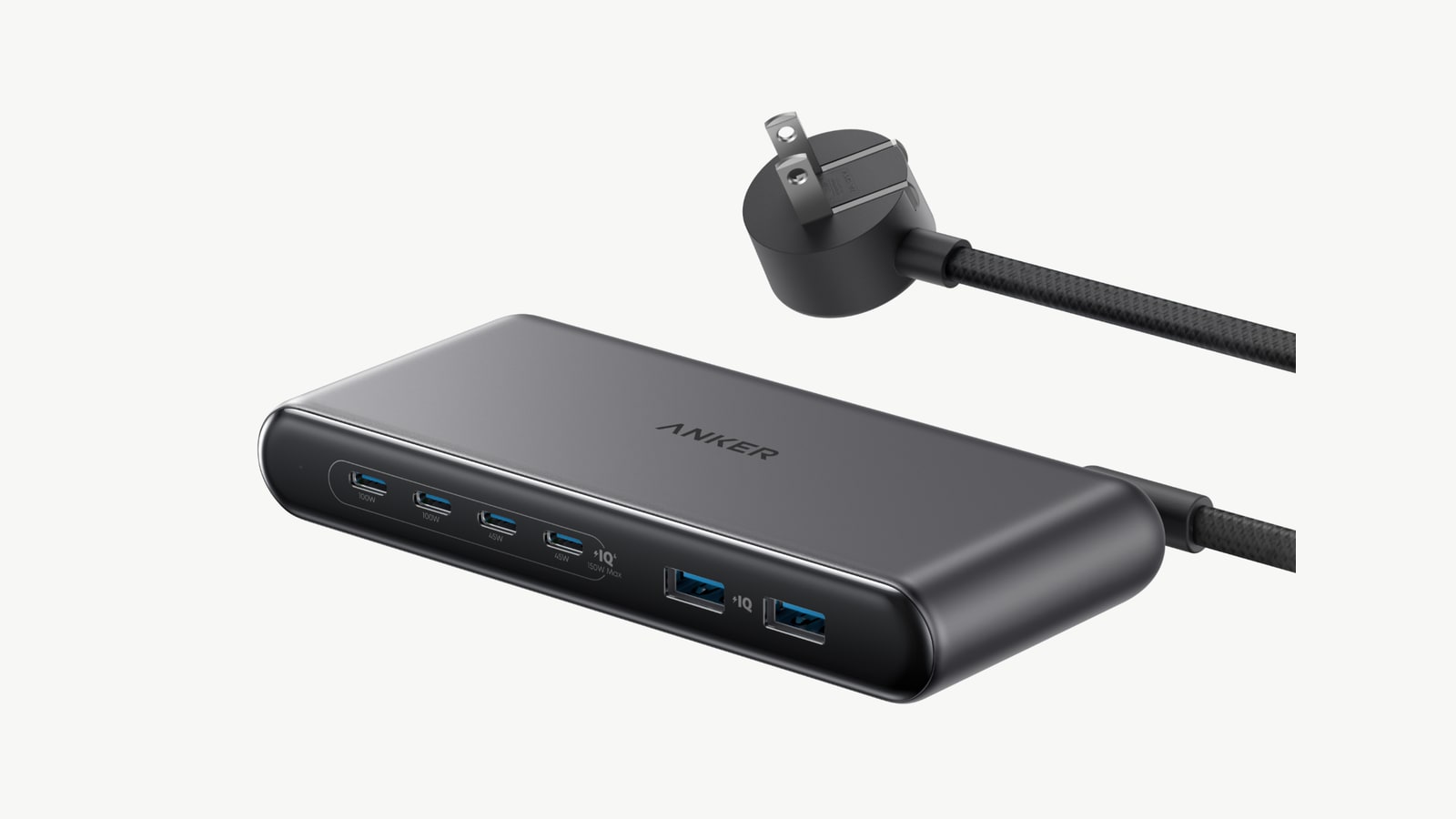
Anker's new Travel Charging Station should be an easy recommendation. It is flat, has four USB-C ports, and uses a detachable cord with a folding plug. That sounds ideal for a hotel desk or shared Airbnb.
Instead, we came away disappointed. The problem is not that 150W is unusable. It is that 150W shared feels underpowered in a charger measuring 5.9 inches long and weighing 0.64 pounds before you add the cord.
The power does not match the size
The first two USB-C ports can each deliver up to 100W when used alone. The other two top out at 45W, while the full charger has a 150W ceiling. That is enough for a laptop, phone, tablet, and a few smaller devices, but it is not enough to let two 100W laptops charge at their maximum rates together.
For a genuinely tiny charger, that compromise would be understandable. This is closer to a slim desktop station. Once a charger takes up this much room in a bag, it should either deliver substantially more power or replace more of the gear you would otherwise carry.
Anker's flat shape helps it slide beside a laptop, and the 100–240V input makes it usable abroad with the right plug adapter. Those are real advantages. They just do not make the charging math more compelling.
The USB-A ports are holding it back
The front edge has four USB-C ports and two USB-A ports. Those USB-A ports top out at only 12W, which is fine for old earbuds or a legacy cable but not much else.
We wish Anker had scrapped them. Removing both could have made the station shorter, or created room for a larger power budget and a cleaner all-USB-C layout. Most of the devices we travel with now use USB-C, and anyone buying a new premium charging station should not have to give up bag space for two slow ports they may never touch.
Six ports sounds better in a product listing than four. In practice, four stronger USB-C ports would have been the more modern and useful design.
Belkin gives you more flexibility at this size
At roughly this footprint, the Belkin Travel Power Strip 70W is the more versatile option. It is not as powerful over USB, but it combines two AC outlets, one USB-C port, two USB-A ports, a built-in USB-C cable, and a five-foot power cord. Those AC outlets can replace a separate strip when a hotel room has one badly placed receptacle or when you still carry a camera charger, CPAP machine, or another plug-in device.
The Belkin is heavier, so the Anker still has an advantage if you need several USB-C ports and nothing else. But that is a narrow win. Anker asks you to carry a power-strip-size slab without giving you AC outlets, and its 150W total is not generous enough to compensate.
Should you buy the Anker Travel Charging Station?
Only if four USB-C ports in a flat shape match your kit perfectly. It can replace several charging bricks, and travelers carrying one laptop plus smaller devices are unlikely to hit its limits often.
For everyone else, skip it. A smaller multiport wall charger is easier to pack, while the Belkin is more adaptable when you are already willing to carry something this large. Anker got the shape right, but the port selection and power budget feel like a missed opportunity.
Affiliate disclosure: We may earn a commission if you buy through our links at no extra cost to you.