Best Ultralight Power Banks for Backpacking in 2026
The best ultralight power banks for backpacking balance real energy, low weight, USB-C charging, and weather protection for overnight to multi-day trips
Quick Take
- The Nitecore NB10000 Gen4 is the best ultralight power bank for most backpackers because it combines 39Wh, dual USB-C ports, IPX7 protection, and a 143g body.
- The Nitecore NB Air cuts weight to 89g for an overnight or careful weekend, while the NB20000 Gen3 doubles capacity for longer gaps between outlets.
- The FLEXTAIL ZERO POWER 10,000C is the lower-cost 10K alternative, but its IPX4 rating is a step down from the Nitecore's IPX7 protection.
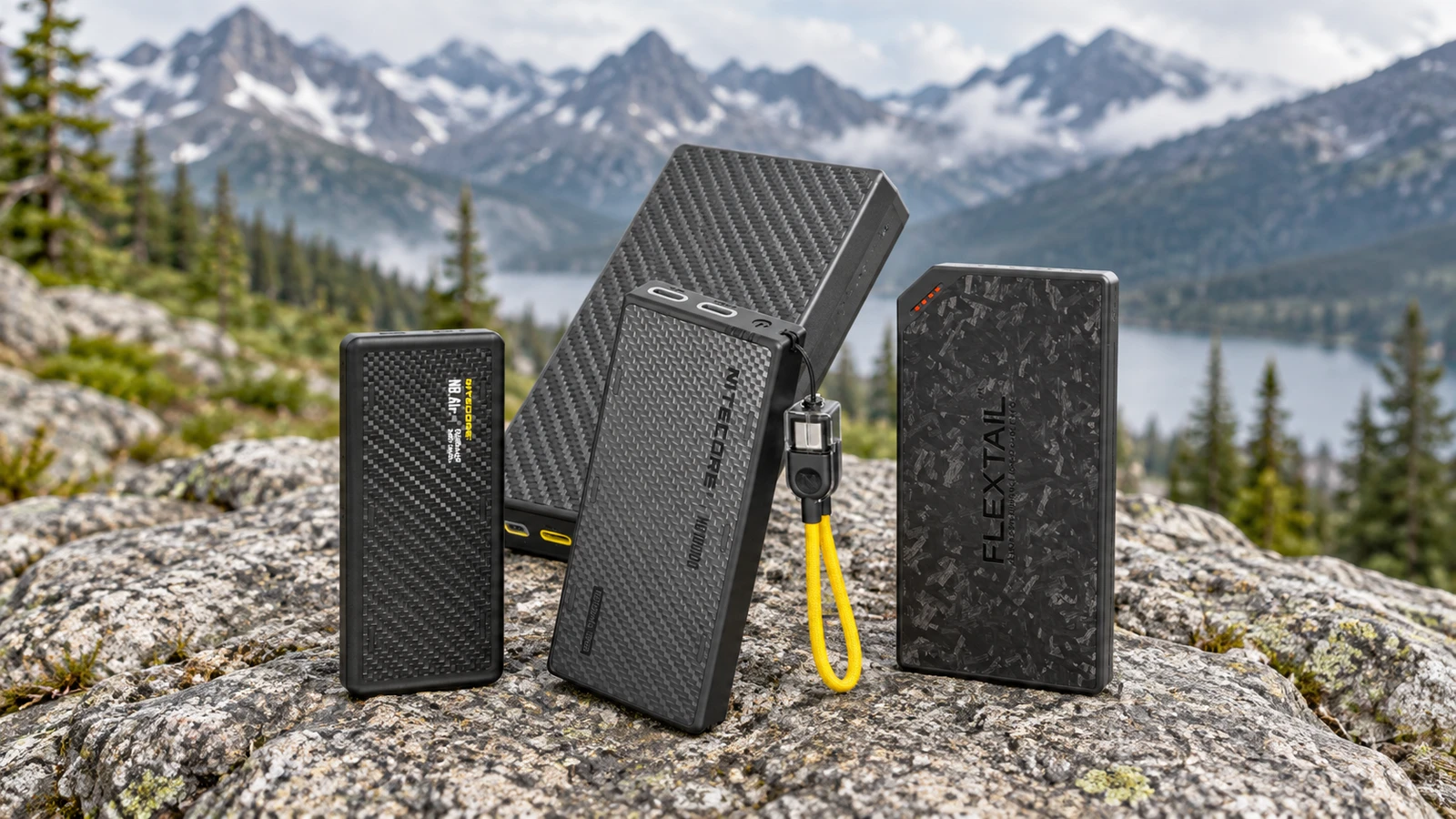
The Nitecore NB10000 Gen4 is the best ultralight power bank for most backpackers. It gives a weekend kit 39Wh of nominal energy, weighs 143g, has two USB-C ports, and carries an IPX7 water-resistance rating.
Go smaller only when you know 5,000mAh is enough. The 89g Nitecore NB Air is the lightest pick here for an overnight or low-power phone setup. For longer trips, the Nitecore NB20000 Gen3 doubles capacity without doubling weight. The FLEXTAIL ZERO POWER 10,000C is a thin, lower-cost 10K alternative with weaker weather protection.
This is a researched, specification-verified guide, not a claim that we field-tested every model. We prioritized current batteries with manufacturer-listed weight, watt-hours, rated output energy, charging speeds, and water protection.
Ultralight Power Banks Compared
| Model | Weight | Nominal energy | Rated output energy | Input / output | Ports | Water rating |
|---|---|---|---|---|---|---|
| Nitecore NB10000 Gen4 | 143g / 5.0 oz | 39Wh | 34–36Wh at 5V | 22.5W / 22.5W | 2× USB-C | IPX7 |
| Nitecore NB Air | 89g / 3.14 oz | 19.4Wh | 16.5Wh at 5V | 18W / 18W | 1× USB-C | IPX7 |
| FLEXTAIL ZERO POWER 10,000C | 145g / 5.1 oz | 38.7Wh | 35Wh at 5V in Efficient mode | 18W / 22.5W | 1× USB-C | IPX4 |
| Nitecore NB20000 Gen3 | 291g / 10.26 oz | 72Wh | 50.5Wh at 5V | 18W / 22.5W | 2× USB-C | IPX5 |
Nominal mAh is not the energy that reaches your phone. Voltage conversion and charging losses reduce usable output, which is why the manufacturer-rated energy figures matter. Our mAh versus Wh guide explains the difference.
Best Overall: Nitecore NB10000 Gen4
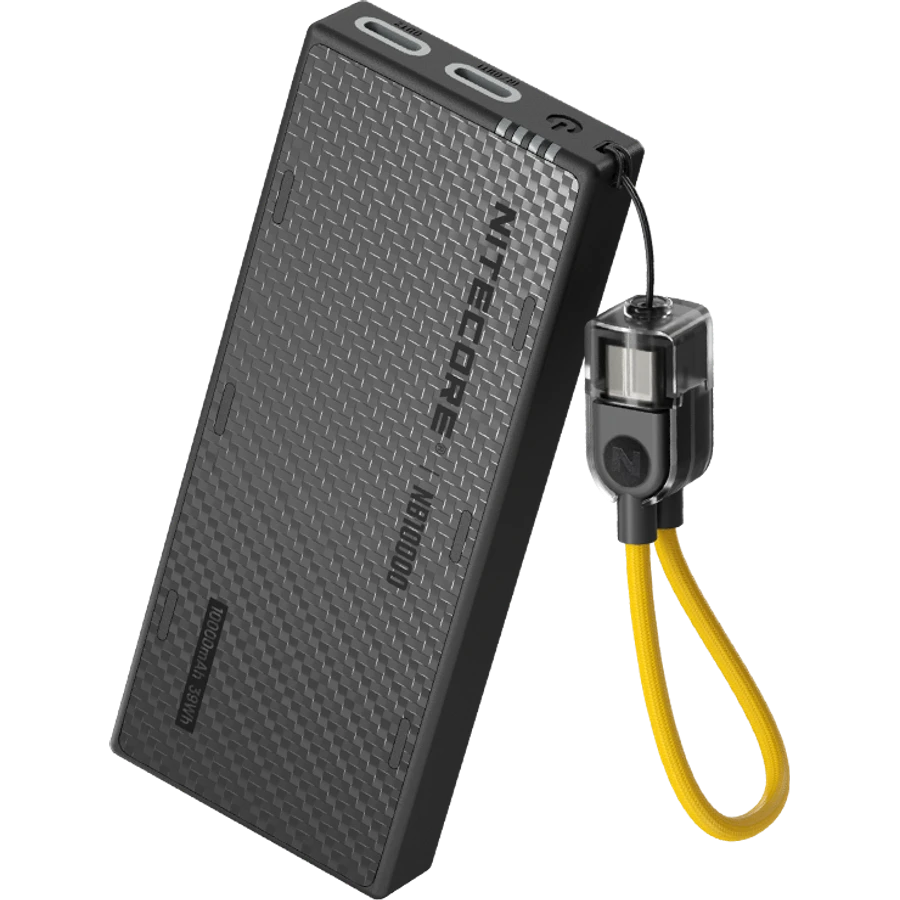
The NB10000 Gen4 sits in the useful middle: enough energy for a normal weekend without committing 10 ounces to the battery alone. Nitecore lists 39Wh nominal and 34Wh at a typical 5V/3A output, or 36Wh at the slower 5V/1A rate. That rated figure gives a better planning baseline than the 10,000mAh headline.
The NB10000 Gen4 accepts and delivers up to 22.5W over USB-C, although total output falls to 15W when two devices are connected. The dual-port layout adds flexibility for a phone, headlamp, watch, or satellite communicator, but this remains a one-device-at-a-time battery when speed matters.
IPX7 protection is the other reason it wins. The FLEXTAIL is only 2g heavier and noticeably thinner, but its IPX4 rating covers splashes rather than immersion. On a wet trail, the Nitecore earns the price premium.
Best for: Most one- to three-night trips, especially when rain is likely or more than one USB-C device needs charging.
Lightest Pick: Nitecore NB Air
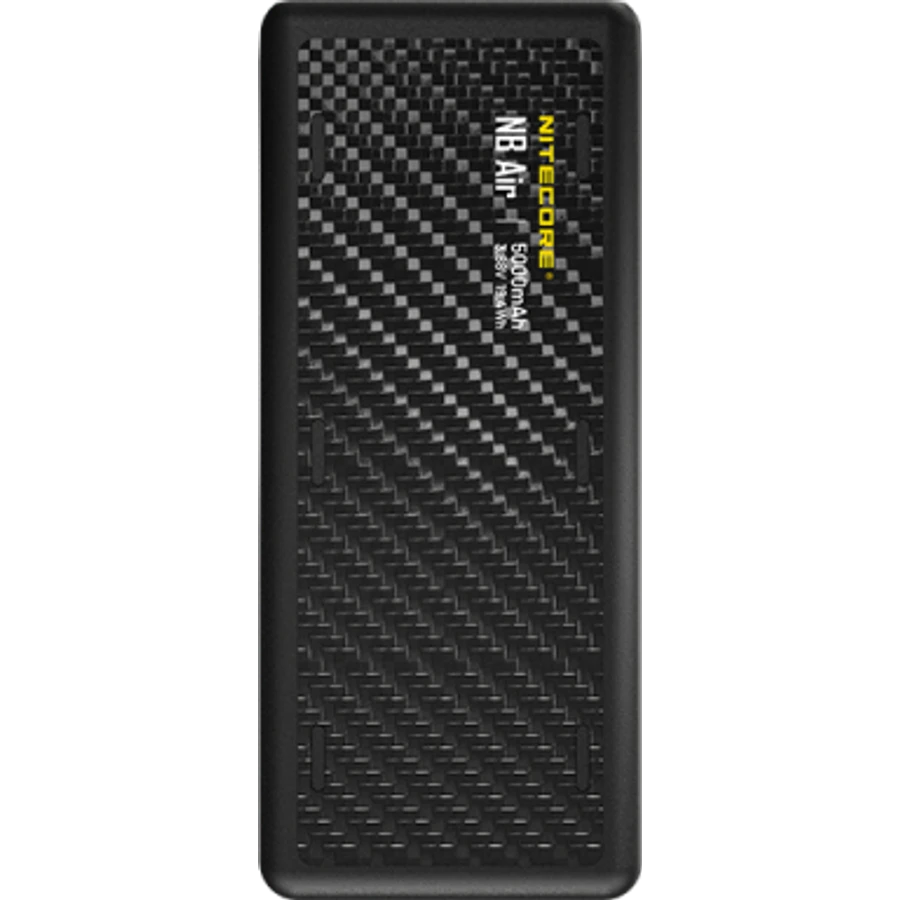
At 89g, the NB Air saves 54g over the NB10000 Gen4. Its 19.4Wh cell is rated to deliver 16.5Wh at 5V, and the single USB-C port handles input and output at up to 18W. It also keeps the same IPX7 water rating as the larger Nitecore.
The compromise is not subtle: this is half the battery. It makes sense for an overnight, a day hike with heavy navigation use, or a careful weekend setup where the phone starts full and stays in airplane mode. It leaves little margin for cold weather, poor signal, frequent photography, or charging several devices.
One port also means the NB Air cannot charge a device while it is being refilled. Bring the right USB-C cable; Nitecore does not include one.
Best for: An overnight or minimalist phone-only setup where every ounce matters and 16.5Wh of rated output is enough.
Best 10K Alternative: FLEXTAIL ZERO POWER 10,000C
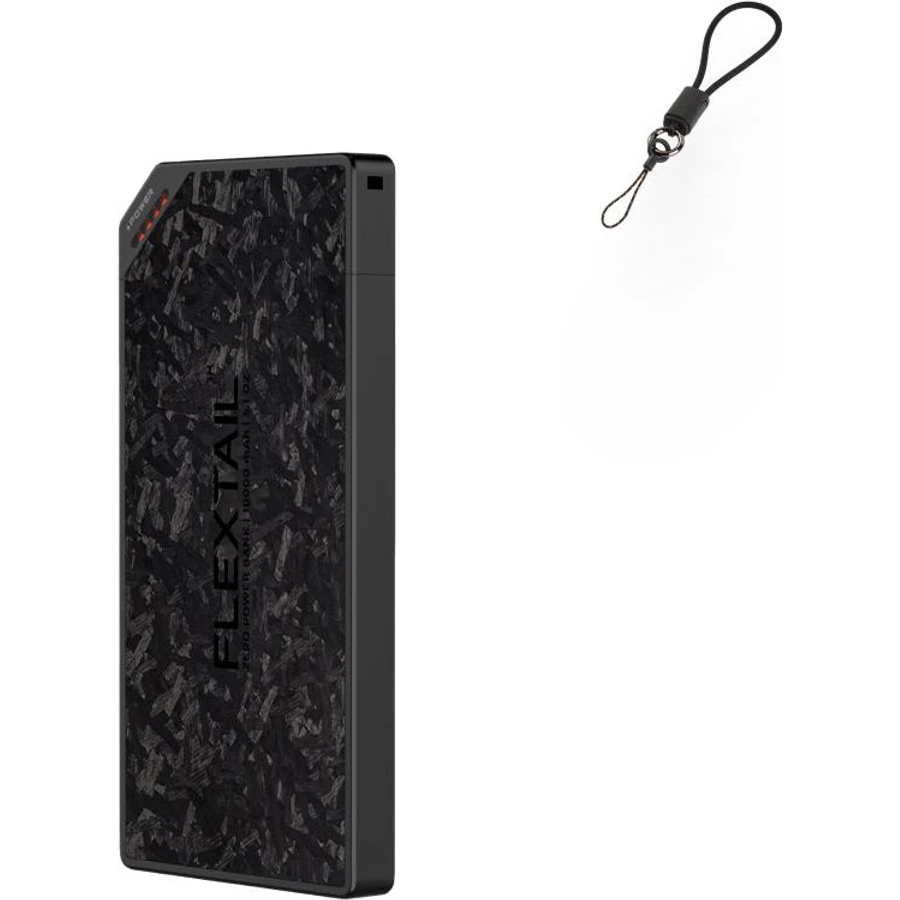
The ZERO POWER 10,000C weighs 145g, just 2g more than the Nitecore, but its 9.9mm body is 4.6mm thinner. FLEXTAIL lists 38.7Wh nominal and a 7,000mAh rated capacity at 5V/1A in its Efficient mode, equal to 35Wh. Output reaches 22.5W, while input tops out at 18W.
It is the value choice. On October 9, 2026, FLEXTAIL listed it at $56.99, while Sports Basement listed the NB10000 Gen4 at $83.95. That gap is meaningful when both weigh almost exactly the same.
The tradeoffs explain why it is not the default. It has one USB-C port instead of two and an IPX4 rating instead of IPX7. The battery should handle rain and splashes, but it deserves a dry bag in sustained wet conditions.
Best for: Backpackers who want 10K capacity at the lowest cost and are willing to trade stronger water protection and a second port for a thinner body.
Best 20K Pick: Nitecore NB20000 Gen3
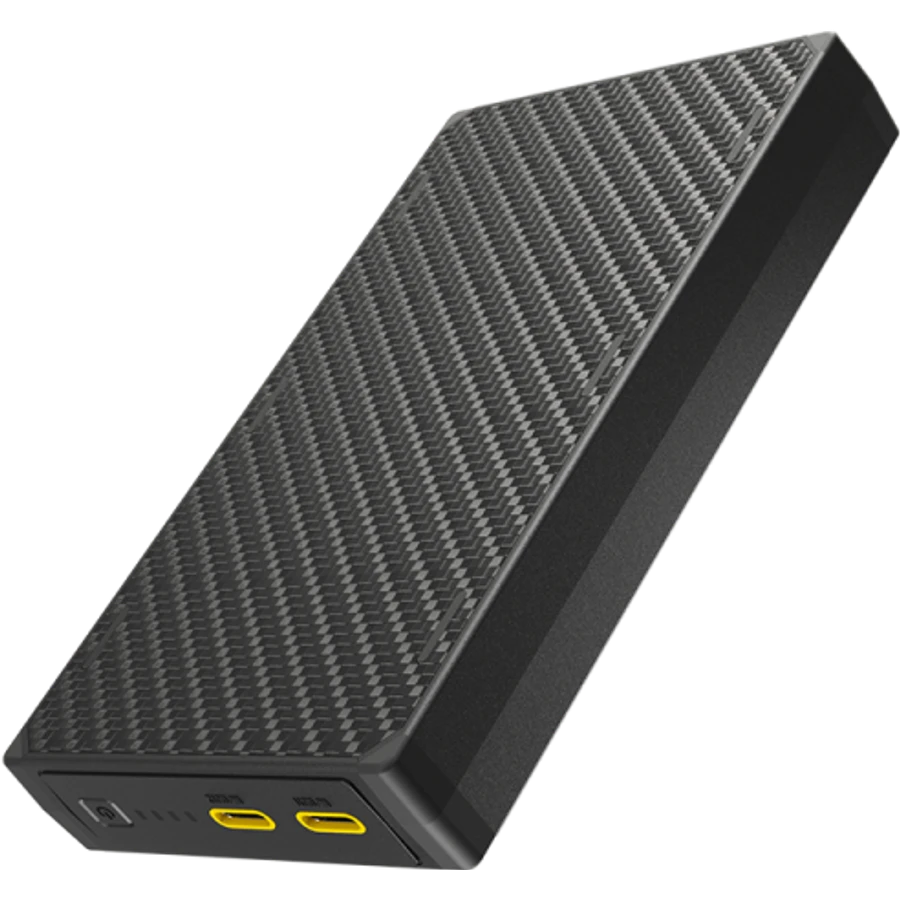
The NB20000 Gen3 is for long gaps between outlets, not a normal weekend. Its 72Wh battery weighs 291g, only 5g more than carrying two NB10000 Gen4 units, and Nitecore rates its 5V output energy at 50.5Wh. Dual USB-C ports provide up to 22.5W from one port or 15W total from both.
The larger battery does not recharge quickly. Input tops out at 18W, so a short town stop will not refill it the way a high-input laptop battery can. If you carry a USB-C laptop or prioritize fast recharging over trail weight, our 20,000mAh Nitecore comparison covers the 65W alternative; the full review of that 65W model goes deeper on its narrower shape and IPX8 protection.
IPX5 protection handles rain and water jets but not immersion. Keep it inside a pack liner when the forecast turns wet.
Best for: Four or more days between reliable outlets, several devices, or a power-hungry phone and navigation setup.
Pick Capacity by Your Actual Trip
- 5,000mAh: Overnight trips, day hikes, and low-use phone setups. Start with every device full.
- 10,000mAh: The default for a weekend or three careful days. It balances useful reserve with a five-ounce carry.
- 20,000mAh: Longer resupply gaps, several devices, poor-signal areas, heavy photography, or repeated GPS use.
Cold changes the calculation. Lithium batteries deliver less useful energy as temperatures fall, and keeping a normal power bank insulated near your body remains the lightest solution for most trips. For sustained winter exposure, see our cold-weather power-bank guide.
Do not size a battery from phone capacity alone. Add the watch, headlamp, camera, and communicator energy you expect to use, then leave a reserve for weather, navigation, and charging losses. Test the complete setup before a remote trip rather than assuming a 10,000mAh label means two full phone charges.