Best Cold-Weather Power Banks for Winter Camping (2026)
The best cold-weather power banks use documented low-temperature operation, with lightweight, heated, and high-capacity picks for skiing and winter camping
Quick Take
- The Nitecore SUMMIT 10000 is the best cold-weather power bank for most winter trips because its heater, 38.5Wh battery, and 6.17-ounce body cover the useful middle ground.
- The SUMMIT Air is lighter and more waterproof for a ski day, but Nitecore says not to recharge the bank itself below 32°F.
- The SUMMIT 20000 doubles nominal energy for longer winter trips, though it weighs 11.11 ounces and still tops out at 20W.
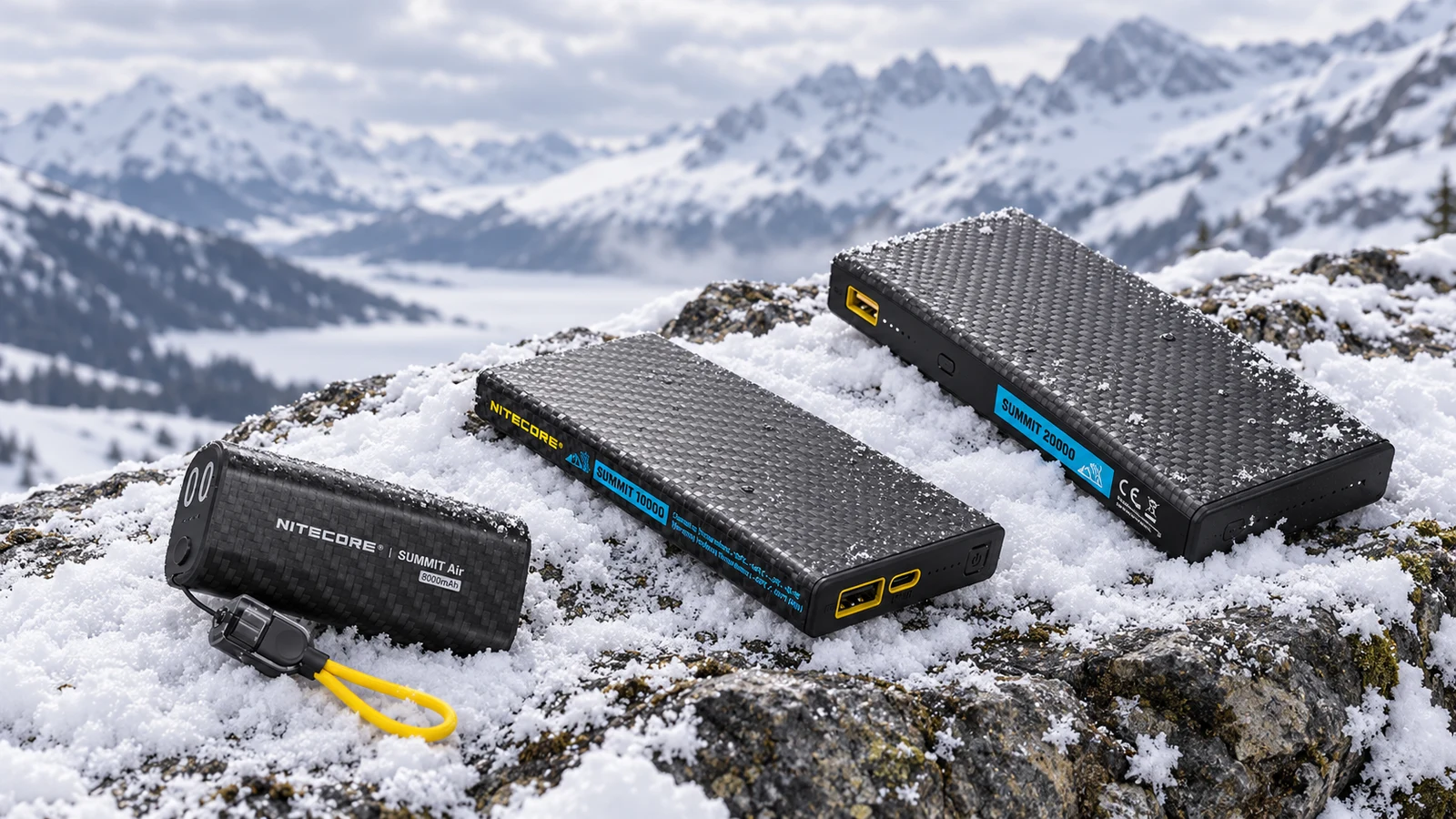
The Nitecore SUMMIT 10000 is the best cold-weather power bank for most winter trips. It is the smallest model here with a documented low-temperature heating mode, and its 38.5Wh battery is a more useful reserve than the lighter SUMMIT Air without jumping to an 11-ounce pack.
Choose the SUMMIT Air for a ski day when weight and water protection matter more than capacity. Choose the SUMMIT 20000 when two or more days away from an outlet matter more than keeping the battery light.
These are researched, specification-verified recommendations. We did not cold-chamber test the batteries, and the -40°F figures below are Nitecore's operating or discharge ratings, not our measured performance. We excluded ordinary power banks whose manufacturers do not document low-temperature operation. That leaves a short list, but it is more useful than pretending any battery with a rugged case is winter-rated.
Cold-Weather Power Banks Compared
| Model | Weight | Nominal energy | Rated output capacity | Maximum output | Cold management | Water rating |
|---|---|---|---|---|---|---|
| Nitecore SUMMIT Air | 135g / 4.76 oz | 28.8Wh typical | 4,700mAh at 5V/3A | 22.5W | -40°F discharge rating; no subfreezing recharging | IPX8 |
| Nitecore SUMMIT 10000 | 175g / 6.17 oz | 38.5Wh | 6,400mAh at 5V/1A | 20W | Heating mode below 32°F | IPX5 |
| Nitecore SUMMIT 20000 | 315g / 11.11 oz | 77Wh | 13,500mAh at 5V/2A | 20W | Heating mode below 32°F | IPX5 |
The rated output-capacity column is the better planning number. A 10,000mAh cell does not deliver 10,000mAh at USB voltage because voltage conversion and heat consume some energy. Our mAh versus Wh guide explains why the label and usable output differ.
Best Overall: Nitecore SUMMIT 10000
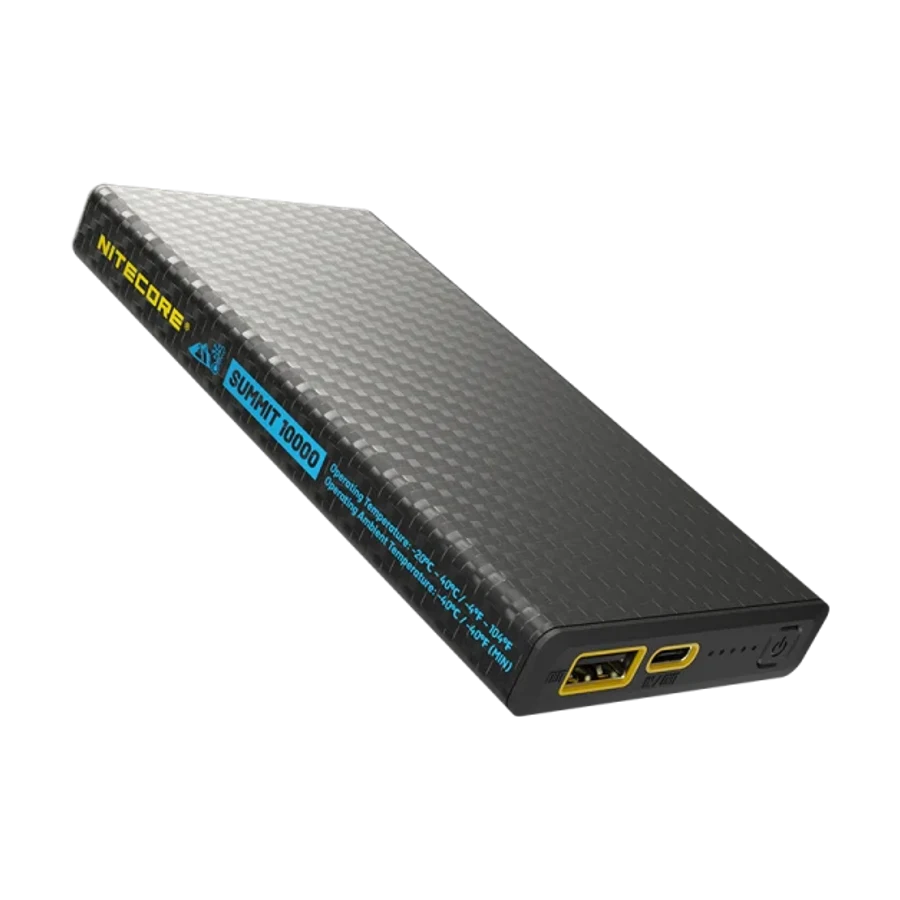
The SUMMIT 10000 gets the balance right. Its 38.5Wh battery weighs 175g, or 6.17 ounces, and the thin 4.94 x 2.50 x 0.57-inch body is easier to fit beside a phone than the thicker 20K model. One USB-C port handles input and up to 20W output; USB-A covers an older cable or accessory. Total output drops to 15W when both ports are used.
The heater is the reason to buy it over a normal 10K battery. According to the official SUMMIT 10000 manual, heating can be started with the mode button below 32°F and starts automatically when the cold bank has input or output. Nitecore says it can be used directly above 14°F; below 14°F, allow five to ten minutes for preheating. The manual also recommends using the included insulated pouch below freezing.
This is still a modest phone-class power bank. Its 20W ceiling is fine for a phone, action camera, GPS unit, headlamp, or satellite communicator, but it is not a laptop battery. IPX5 covers rain and snow exposure, not immersion.
Best for: Winter hiking, overnight camping, mountaineering, and ski tours where 10K capacity is enough but the battery may stay below freezing for hours.
Lightest Pick: Nitecore SUMMIT Air
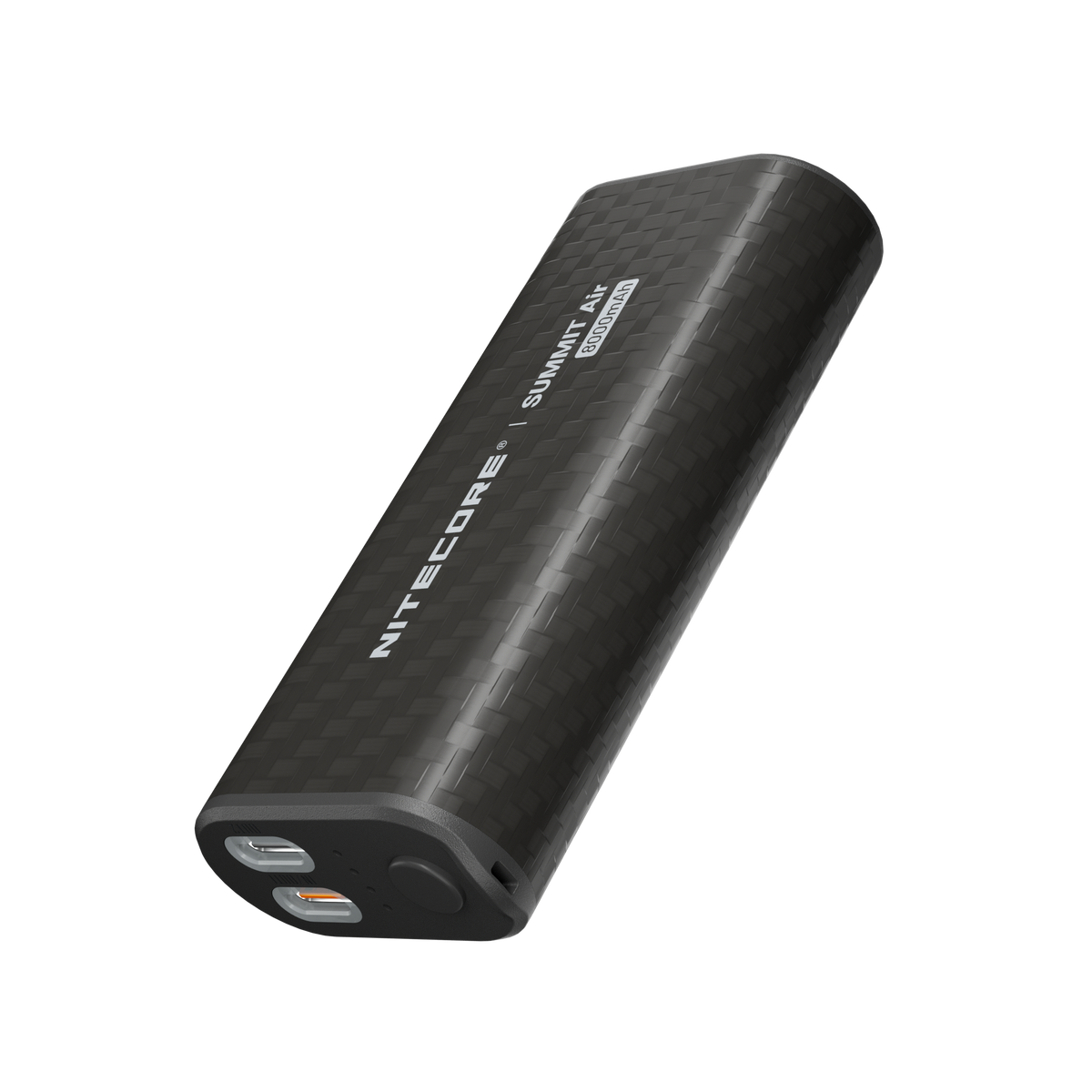
The SUMMIT Air saves 40g over the SUMMIT 10000 and is easier to carry in a ski-jacket pocket. It also has the strongest water rating here: IPX8 rather than IPX5. Its two USB-C ports can charge one device at up to 22.5W or share 15W across two devices.
The compromise is not only capacity. Nitecore gives the Air a -40°F to 140°F discharge range, but its official product page lists a 32°F to 122°F charging range and explicitly says not to recharge the bank itself below freezing. Nitecore does not document the low-temperature heating mode found in the other two SUMMIT models.
That makes the Air the cleanest choice for a resort ski day, winter race, or light alpine outing: charge it indoors, carry it outside, and use its 28.8Wh reserve for smaller electronics. It is not the model to choose when you expect to refill the bank from a solar panel in subfreezing conditions.
Read our full SUMMIT Air ski-power-bank review for a closer look at its size, ports, and jacket-pocket use.
Best for: Skiing, winter running, and single-day trips where low weight, compact dimensions, and IPX8 protection beat maximum capacity.
Best for Multi-Day Trips: Nitecore SUMMIT 20000
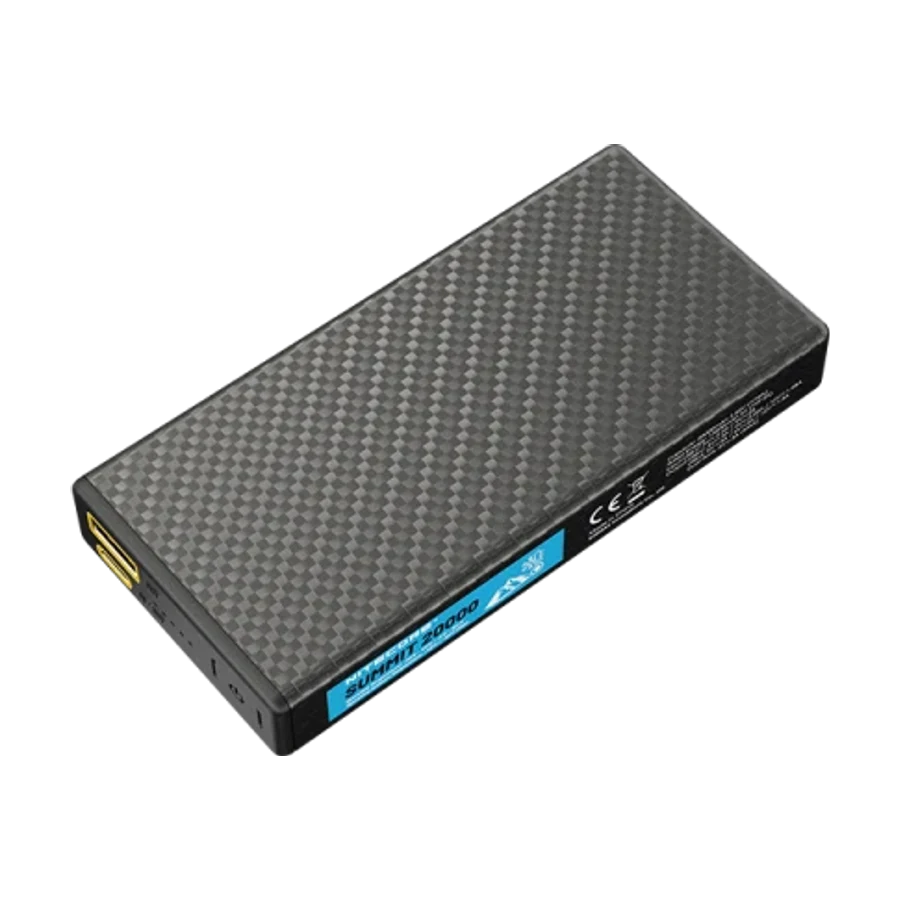
The SUMMIT 20000 doubles the 10K model's nominal energy to 77Wh and lifts rated output capacity from 6,400mAh to 13,500mAh at 5V. That is the meaningful upgrade for a hut trip, winter camp, photography setup, or several devices between outlets.
Its official manual documents the same heating behavior as the 10K model: automatic activation below freezing when input or output is connected, manual activation with the mode button, and a five- to ten-minute preheat below 14°F. Nitecore recommends the included insulated pouch below freezing.
The larger battery does not charge devices faster. USB-C output still tops out at 20W, USB-A remains the second port, and combined output is 15W. At 315g, or 11.11 ounces, it also weighs 80% more than the SUMMIT 10000. Carry it because you need the reserve, not because it is the most efficient option for a day outside.
Best for: Multi-day winter camping, cold-weather photography, several small devices, or long gaps between reliable outlets.
Heated and Cold-Rated Do Not Mean the Same Thing
All three batteries have a published -40°F minimum, but they manage cold differently. The SUMMIT Air has a manufacturer-documented discharge range down to -40°F and a separate rule against recharging below 32°F. The SUMMIT 10000 and 20000 add active heating and can preheat before use in deeper cold.
That distinction matters if the power bank itself needs to accept energy outside. Discharging a cold-rated bank into a phone is not the same operation as recharging the bank's own lithium-ion cells. Follow the model-specific manual rather than assuming a low discharge rating permits subfreezing recharging.
The connected device remains another limit. A power bank operating at -20°F does not make a phone, camera, or cable equally cold-tolerant. Keep the whole charging setup insulated when practical, avoid exposing open ports to snow, and let wet ports dry before connecting a cable.
When a Normal Power Bank Is Enough
Do not pay for a SUMMIT battery just because winter exists. A conventional battery kept in an inside coat pocket can be the better value for commuting, resort days with regular lodge access, or mild trips where the bank never gets deeply cold. Our general power-bank roundup covers faster and cheaper everyday options, while the ultralight backpacking power-bank guide prioritizes energy per ounce.
Buy a dedicated cold-weather model when the bank must spend sustained time outside your insulation, when you need documented operation below the usual range, or when failure would affect navigation and communication. Even then, plan capacity from all the devices you carry and leave a reserve for temperature, charging losses, and unexpected delays.
As of October 22, 2026, Nitecore Store listed all three SUMMIT models as backordered. The buy cards above go to the exact product pages so you can check current stock rather than relying on an old availability claim.