BLUETTI Elite 30 V2 vs Anker SOLIX C300
The BLUETTI has twice the rated AC output and solar input. The lighter Anker C300 AC is the better hub for laptop and camera gear.
Quick Take
- Buy the BLUETTI Elite 30 V2 by default for its 600W rated AC output and 200W solar-input ceiling.
- Buy the Anker SOLIX C300 AC for two 140W USB-C ports, three AC outlets, and a slightly smaller, lighter body.
- This comparison covers the AC-outlet Anker SOLIX C300, model A1722, not the smaller C300 DC.
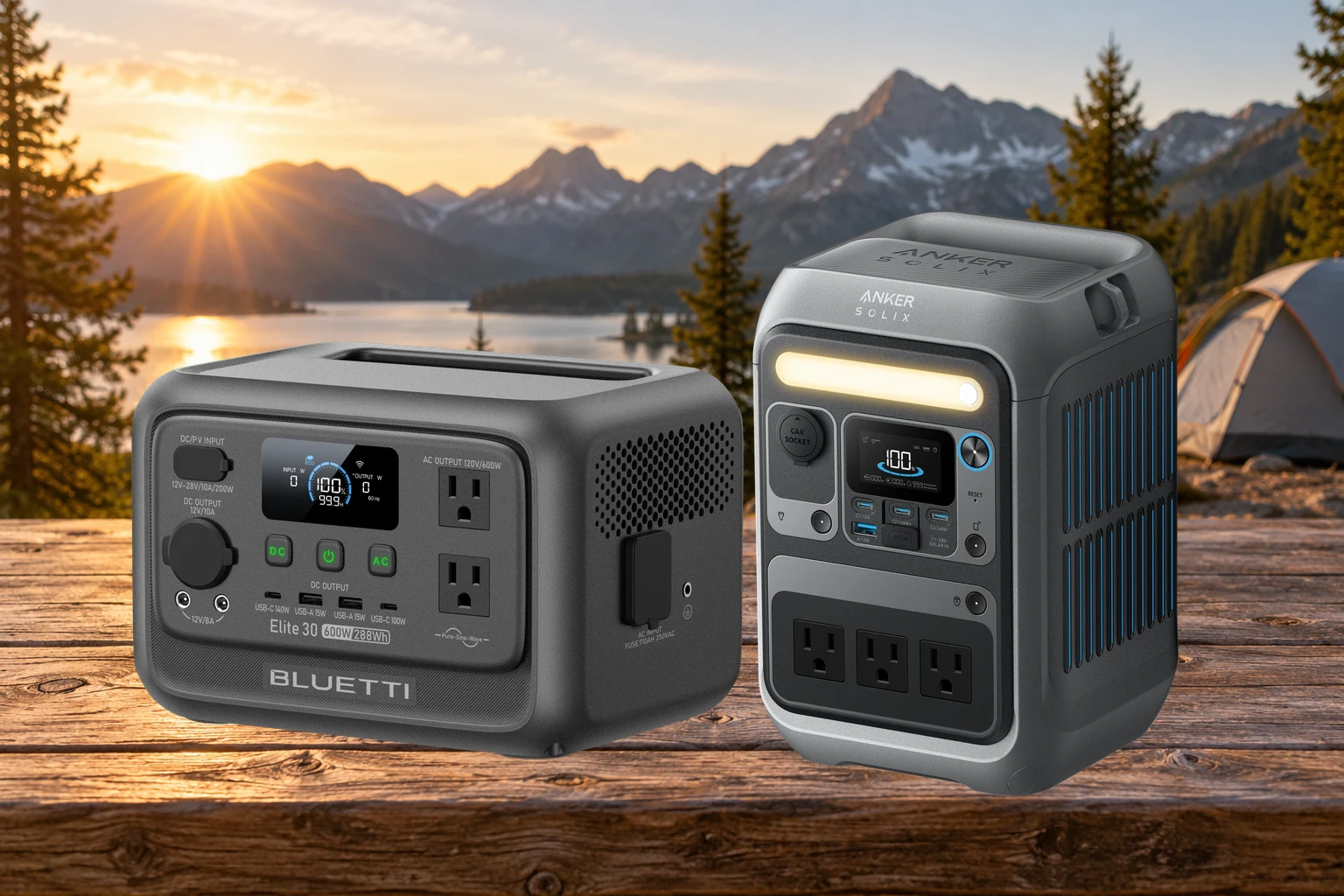
The BLUETTI Elite 30 V2 is the better portable power station for most people. It has the same 288Wh capacity as the Anker, but its 600W rated AC output is twice as high and its 200W solar-input ceiling is also double. That extra headroom makes the BLUETTI more useful for camping appliances, several devices running together, and short backup jobs.
Choose the Anker SOLIX C300 AC when the station will mostly charge laptops, cameras, tablets, and phones. It has two USB-C ports rated for up to 140W each, one more AC outlet, a narrower footprint, and a 0.38-pound weight advantage.
This is a researched, specification-verified comparison, not a claim of hands-on testing. It covers the AC-outlet Anker SOLIX C300, model A1722. Anker also sells a smaller C300 DC without AC outlets; that is a different product.
BLUETTI Elite 30 V2 vs Anker SOLIX C300 Specs
| Specification | BLUETTI Elite 30 V2 | Anker SOLIX C300 AC |
|---|---|---|
| Capacity | 288Wh | 288Wh |
| Rated AC output | 600W | 300W |
| AC outlets | 2 | 3 |
| USB-C | 140W + 100W | 140W + 140W + 15W |
| Solar input | 200W max | 100W max |
| UPS transfer | 10ms or less | Under 10ms |
| Weight | 9.48 lb | 9.1 lb |
| Dimensions | 9.8 × 7 × 6.6 in | 6.5 × 6.3 × 9.5 in |
Both use LiFePO4 batteries and support app control over Bluetooth or Wi-Fi. Neither capacity number gives an advantage: both store 288Wh, so actual runtime will depend on the load, conversion losses, temperature, and each station's own overhead.
The key numbers above come from the manufacturers' model-specific US manuals. BLUETTI's Power Lifting mode supports certain pure resistive loads up to 1,500W, while Anker's SurgePad supports compatible loads up to 600W. Those modes do not change the normal inverter ratings. Compare these as 600W and 300W power stations, not 1,500W and 600W models.
The BLUETTI Is the Better All-Purpose Power Station
The Elite 30 V2's 600W inverter is the strongest reason to buy it. A 288Wh battery is still too small for long appliance runs, but the higher rating lets it start and run a wider range of modest camping and backup loads. It also leaves more room for a router, lights, laptop charger, fan, or compact cooler to run together without crossing the inverter limit.
BLUETTI also accepts up to 200W of solar input, compared with 100W for the Anker. Real solar charging rarely holds a panel's nameplate output all day, but the higher ceiling gives the Elite 30 V2 more room to take advantage of good conditions and a larger panel.
Its USB-C setup is still strong. One port reaches 140W and the other 100W, enough for a high-powered laptop plus a second USB-C device without using either AC outlet. It also has two 15W USB-A ports, a car socket, and two DC barrel outputs.
The tradeoff is layout. BLUETTI provides two AC outlets instead of Anker's three, and its low, wide body takes more table or shelf space. If you need more runtime or an expansion-battery connection, neither model is the obvious answer; our BLUETTI Elite 30 V2 vs EcoFlow RIVER 3 Plus Wireless comparison covers a larger expandable alternative.
The Anker Is Better for USB-C Travel Tech
The C300 AC puts more emphasis on device charging. Two USB-C ports are each rated for up to 140W, while a third supplies 15W. That is the more flexible arrangement for two demanding laptops, a laptop and camera battery system, or a desk full of USB-C gear.
Anker also fits three AC outlets onto the front and includes a built-in light. Its 6.5-by-6.3-inch footprint is smaller than the BLUETTI's, although the C300 stands 9.5 inches tall. That shape can fit neatly beside a desk or car seat, but it may be less convenient under a low shelf.
Do not buy it for a dramatic weight saving. At 9.1 pounds, the Anker is only 0.38 pound lighter than the BLUETTI. Port layout and shape matter more than that small difference.
The real compromise is outside USB-C. The C300's inverter is rated at 300W, and its solar input tops out at 100W. Those limits are fine for electronics, a light, a fan, or other predictable small loads, but the BLUETTI gives you more margin when the load list grows. Our EcoFlow RIVER 3 Plus Wireless vs Anker SOLIX C300 comparison covers another 600W alternative if you like the Anker's portability but want expansion support.
Which One Should You Buy?
Buy the BLUETTI Elite 30 V2 by default. Both batteries hold 288Wh and weigh about nine pounds, so the BLUETTI's 600W rated AC output and 200W solar input are meaningful gains without a major size or weight penalty. It is the safer pick for mixed camping gear and short outage duty.
Buy the Anker SOLIX C300 AC, model A1722, if two 140W USB-C ports and three AC outlets fit your setup better than a stronger inverter. It is particularly well suited to laptop and camera kits, mobile work, and travel-tech charging where every device is known to stay below the station's limits.
For a broader look at this size class, see our best compact portable power stations guide.
The Bottom Line
The BLUETTI and Anker store the same amount of energy, but they prioritize different jobs. The Elite 30 V2 is the better small power station; the C300 AC is the better dual-USB-C charging hub.
Choose the BLUETTI for most camping and backup kits. Choose the Anker when laptops, cameras, and other USB-C devices are the main load.
Sources
- BLUETTI Elite 30 V2 official product page
- BLUETTI Elite 30 V2 US manual
- Anker SOLIX C300 official product page
- Anker SOLIX C300 A1722 US manual
Affiliate disclosure: We may earn a commission if you buy through our links at no extra cost to you.