How Long Will a Power Station Run a 12V Fridge?
Size a camping power station using your 12V fridge's daily watt-hours, not its compressor wattage. Worked examples cover 250Wh, 500Wh and 1,000Wh batteries.
A power station's fridge runtime comes down to the energy you can spend divided by the energy the fridge uses. A 500Wh station does not automatically mean a weekend of cold drinks, and a compressor drawing 50W does not necessarily use 50W all day.
For a planning example, give the fridge 375Wh of a 500Wh station's capacity and assume it uses 300Wh per day. That works out to 30 hours without recharging. Double the daily consumption to 600Wh and runtime falls to 15 hours. Those are calculated scenarios, not tested runtimes or promises for a particular fridge.
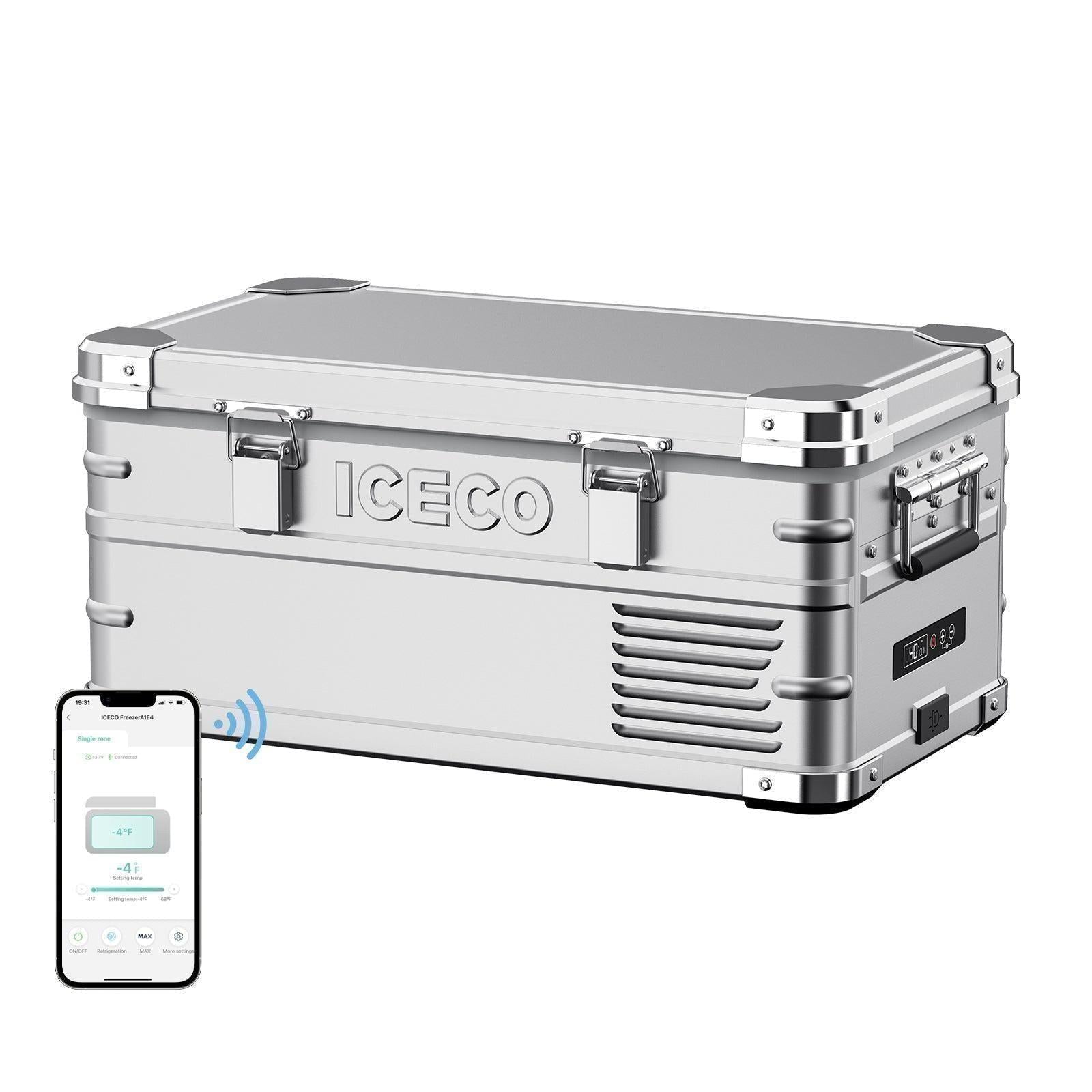
Start with watt-hours per day, not compressor watts
Watts (W) describe power at a moment. Watt-hours (Wh) describe energy used over time. A 50W load running for one hour uses 50Wh. A compressor fridge cycles on and off, so a reading taken while it is actively cooling is not its average over a full day.
The maximum input rating is still important for the cable and power outlet. It just answers a different question. Dometic's CFX3 power guidance explicitly distinguishes maximum rated input from average consumption when explaining battery runtime.
Look for a consumption figure in Wh/24h or kWh/24h, ideally measured in conditions close to your trip. Multiply kWh by 1,000 to get Wh. If all you have is the running wattage, you still need to know how much of the day the compressor runs; guessing one fixed duty cycle for every fridge and campsite is not a useful shortcut.
Use the station's Wh capacity too. If a battery only lists amp-hours, voltage belongs in the conversion: Wh = Ah × nominal battery voltage. Do not treat amp-hours from different-voltage batteries as interchangeable. Our mAh vs Wh explainer covers that distinction in more detail.
The runtime calculation
Once you know the fridge's daily consumption:
Runtime in hours = fridge energy budget in Wh × 24 ÷ fridge consumption in Wh/day
The fridge energy budget is what you can actually deliver to the fridge after allowing for the output path's losses, station overhead, the charge you want left at the end, and anything else plugged in. It is not automatically the large capacity number on the box.
For the examples below, we allocate 75% of nameplate capacity to the fridge, holding back the other 25% for losses and reserve combined. This is a chosen planning assumption, not a universal 75% efficiency rating. It may be too generous or too cautious for your station, connection and weather. The examples start fully charged, have no other loads, and include no solar or driving recharge.
| Station capacity | Fridge energy budget at 75% | At 300Wh/day | At 600Wh/day |
|---|---|---|---|
| 250Wh | 187.5Wh | 15 hours | 7.5 hours |
| 300Wh | 225Wh | 18 hours | 9 hours |
| 500Wh | 375Wh | 30 hours | 15 hours |
| 1,000Wh | 750Wh | 60 hours | 30 hours |
The 300Wh/day and 600Wh/day columns are illustrative consumption scenarios, not categories every fridge will fit. Their point is the difference: a hotter or more demanding trip can erase the runtime advantage you thought a battery had.
A compact 250–300Wh station can make sense for a measured overnight load or a setup you recharge reliably each day. It is not an automatic full-day fridge battery. A 500Wh model buys more room, but even that falls short of a day in the higher-consumption scenario. For a stationary weekend, work backward from the hours you actually need before deciding whether a 1,000Wh station is enough.
An ICECO APL20 worked example
ICECO publishes 0.293kWh per 24 hours for the single-zone APL20. That converts to 293Wh/day, or an average of 293 ÷ 24 = 12.2083…W. It does not mean the compressor draws only 12.2W whenever it is running.
Using that published consumption and the same 375Wh fridge budget from a 500Wh station:
375 × 24 ÷ 293 = approximately 30.7 hours
That is a calculation using ICECO's published reference figure, not a TrekSavvy battery test. The product listing does not state the ambient temperature, fridge setting or loading conditions alongside the figure. Do not assume the same consumption with a freezer setting, a hot vehicle or warm groceries. Measure your own setup before relying on that runtime away from a recharge.
The APL20 review covers the fridge itself. If you need a separate freezer compartment, the APL20 vs APL35 comparison covers that choice; do not simply carry the APL20's daily energy figure over to a larger dual-zone fridge.
Measure one representative day before buying more battery
A useful measurement captures the compressor's idle periods as well as its running periods. Watching the station display for a few minutes will not do that.
- Use the connection you intend to camp with. For a compatible 12V DC setup, use a suitable inline DC energy meter rated for the voltage and current. For the fridge's AC adapter, use a plug-in energy meter rated for that supply. A station app can work if it actually records cumulative energy for the relevant output; an instantaneous watts screen is not enough.
- Set up the fridge as you will use it. Choose the intended fridge or freezer temperature, put in a representative load, and allow the ventilation clearance its manual requires. If you plan to prechill at home, do that before the measurement. If you will cool warm groceries from the battery, include that pull-down load instead.
- Record the energy used over 24 hours. Note the surrounding temperature, lid openings and settings. A cool garage result is not a substitute for a hotter campsite. Repeat under more demanding realistic conditions if those are part of the trip.
- Identify where the measurement was taken. A meter at the fridge input records energy delivered to the fridge. A battery-side figure may already include the station's conversion losses and overhead. Keep that boundary consistent when calculating runtime.
That last point prevents double-counting. If your daily figure already measures energy leaving the station's battery, subtract your reserve and other loads from battery capacity, then divide by that daily battery consumption. Do not apply another blanket loss factor for losses already in the measurement. Conversely, a fridge-input reading does not tell you everything the station spent to deliver it.
Check the 12V outlet before trusting the capacity
Enough Wh does not guarantee that a station can start and run your fridge. The big AC watt rating on the front says nothing conclusive about the separate DC outlet. Check both manuals for the actual DC voltage, continuous-current limit, starting-current requirements and connector compatibility.
Use the fridge's approved DC cable and a station output that meets those requirements. Do not assume a plug that physically fits proves compatibility, or that an adapter increases the outlet's current limit. EcoFlow's RIVER 3 manual specifically warns that its DC output must meet an appliance's starting-current needs. There is no single surge multiplier that proves this for every fridge and station.
A compatible direct-DC connection avoids running the station's AC inverter and the fridge's AC adapter. That can avoid unnecessary conversion overhead, but it is not a fixed percentage runtime upgrade. Compare energy use on your actual setup if the difference matters to the battery you buy. If you use AC instead, include inverter overhead and leave the AC output enabled as required by the station's instructions.
Two different reasons a fridge can stop with charge left
Station timeout: Some stations turn off an output they consider idle. A cycling fridge can look idle between compressor runs. EcoFlow flags this specifically for the RIVER 3's AC output and directs users to set its AC timeout to never in the app for continuous fridge power. Check your own model's manual and test through several compressor cycles; do not assume that AC setting also describes its DC behavior.
Fridge low-voltage protection: A fridge can stop because the voltage reaching it is below its protection threshold, even while the station reports remaining charge. ICECO explains this behavior in its APL20 battery-protection FAQ. Check the cable, connections, source voltage and the manual's recommended setting for that power source. That is a different problem from an AC idle timer. Do not defeat starter-battery protection to squeeze out extra runtime when connected to a vehicle battery.
Size for the gap between recharges
Work backward from the longest stretch you need to cover, not the total number of days away. Under the same illustrative 75% fridge-budget assumption, with no other loads:
- One day at 300Wh/day needs 400Wh of nameplate capacity: 300 ÷ 0.75. A 500Wh station clears that calculation; a 300Wh station does not.
- Two days at 300Wh/day need 800Wh: 600 ÷ 0.75. A 1,000Wh station leaves more room than buying exactly at the calculated minimum.
- Two days at 600Wh/day need 1,600Wh: 1,200 ÷ 0.75. A 1,000Wh station is not a two-day solution under those assumptions.
Those thresholds include the table's chosen allowance, not every possible trip contingency. Replace the consumption and energy-budget assumptions with measurements where you can. Account for phone charging, lights and other loads separately, and leave more margin when your trip is hotter or longer than the day you measured. Do not spend the same reserve twice.
Prechill the fridge and supplies before leaving when practical, keep it out of direct sun, and leave its vents clear. ICECO's use and maintenance guidance also notes that frequent lid openings, especially in hot weather, increase consumption. These habits help, but they do not turn an undersized battery into a guaranteed weekend setup.
Treat recharging as a separate energy budget. Solar-panel nameplate watts multiplied by all daylight hours is not a reliable recharge estimate. Likewise, a short drive does not guarantee a full battery: use the station's supported charging method and the energy you can realistically put back during that drive. When recharge is uncertain, size the battery for the gap without it.
If you are still choosing the fridge, our small 12V camping fridge guide compares capacity and packing tradeoffs. Once you know your daily consumption and required outlet, the compact portable power-station guide is the next place to compare batteries. Start with the energy calculation; then choose the box you are willing to carry.