Lexar Muse vs ES5: Which Magnetic SSD Should You Buy?
The Lexar Muse is dramatically thinner, but the faster, tougher ES5 remains the magnetic portable SSD to buy now for creators
Quick Take
- Buy the Lexar ES5 if you need a magnetic SSD now. It is faster on a compatible host, offers more capacity, and has published durability ratings.
- Wait for the Lexar Muse only if its 3.8mm profile matters more than maximum speed, capacity, and a standard drive-side USB-C port.
- The Muse is scheduled for Q4 2026, and Lexar has not announced pricing. We have not tested it, so sustained performance remains unknown.
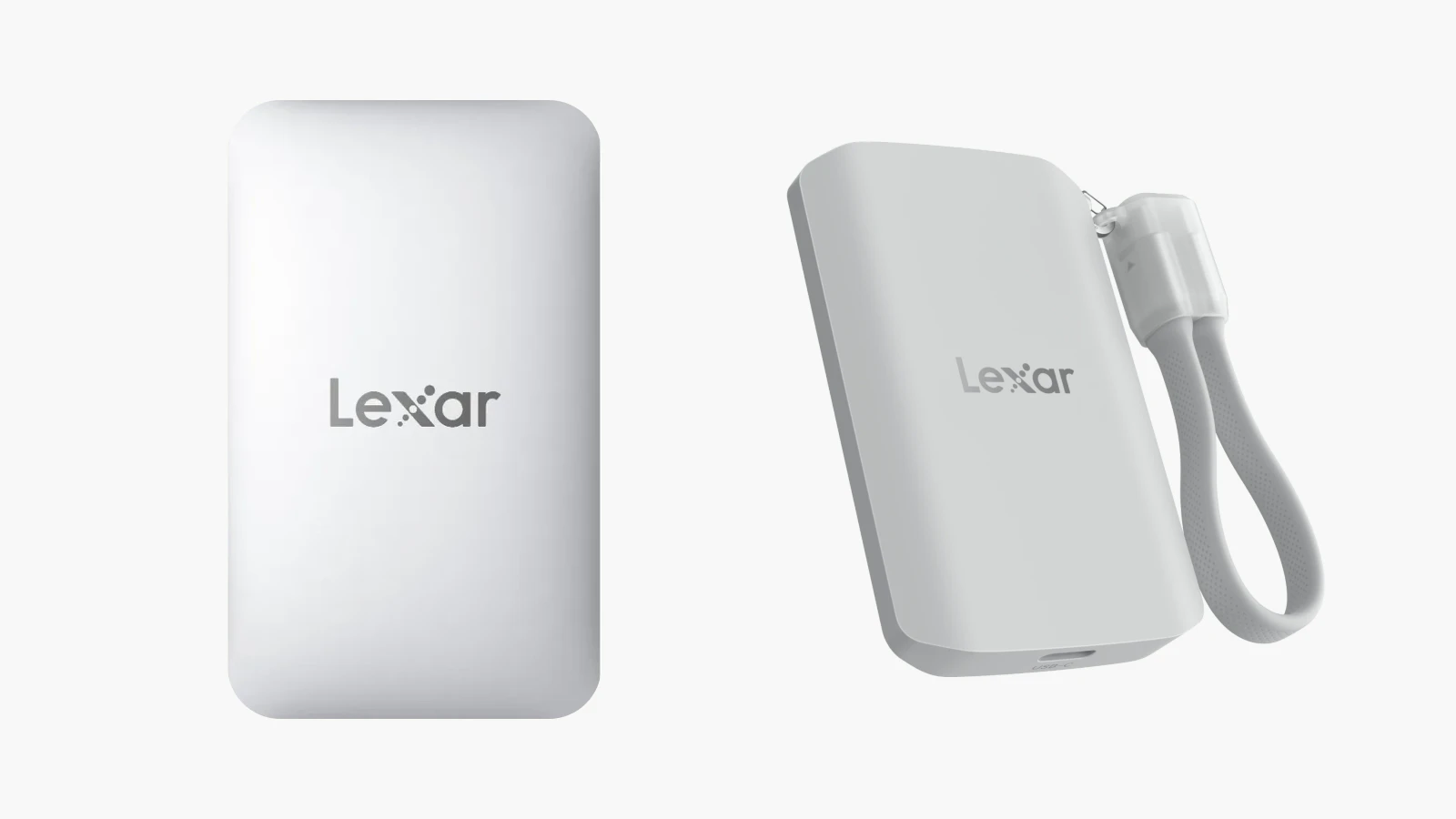
The Lexar ES5 is the magnetic portable SSD to buy now. It is available, rated for up to twice the Muse's read speed, comes in larger capacities, and uses a standard USB-C port on the drive.
The Lexar Muse is the one to wait for only if thinness is the priority. Its 3.8mm body is the whole reason it exists, but that shape requires Lexar's proprietary SnapLink magnetic cable. Pricing is still unknown, and the drive is not scheduled to ship until Q4 2026.
Lexar Muse vs ES5 at a glance
- Lexar Muse: 3.8mm at its thickest point, 512GB or 1TB, up to 1,050MB/s read and 1,000MB/s write, proprietary PogoPin connection, Q4 2026 availability.
- Lexar ES5: 85 x 54 x 11mm, 1TB to 4TB, up to 2,000MB/s read and write on a compatible USB 3.2 Gen 2x2 host, standard USB-C port, IP65 and three-meter drop ratings.
Those are manufacturer maximums, not a prediction that either drive will hold its peak speed through a long transfer. We have not tested the Muse, and its sustained performance cannot be judged until production hardware ships.
Muse is much thinner, but the cable is the compromise
Lexar's Muse announcement says the drive measures 3.8mm at its thickest point and tapers to 1mm at the edge. That is dramatically thinner than the 11mm ES5 and should create a flatter phone rig.
Lexar has not published the Muse's full length, width, or weight, so the available specifications do not support calling it smaller in every dimension. Thin is the defensible claim.
The tradeoff is SnapLink. The Muse replaces a drive-side USB-C port with a proprietary spring-loaded PogoPin connector. Its included cable still ends in USB-C at the phone or computer, but losing or damaging the cable could leave you waiting for a Lexar-specific replacement.
The ES5 uses an ordinary USB-C connection. It is thicker, but replacing its cable is easier and you can choose a different length for a laptop, tablet, or phone setup.
ES5 is faster and gives you more room to grow
The ES5 product specifications rate it for up to 2,000MB/s read and 2,000MB/s write over USB 3.2 Gen 2x2. The Muse tops out at 1,050MB/s read and 1,000MB/s write.
That does not mean an ES5 will run twice as fast on every device. The host port, cable, workload, and temperature all affect real transfer speeds. A device without USB 3.2 Gen 2x2 support cannot reach the ES5's advertised ceiling.
Capacity separates them just as clearly. The Muse is planned in 512GB and 1TB versions. The ES5 comes in 1TB, 2TB, and 4TB, making it the better fit for larger video libraries and longer trips away from a main storage setup.
Our Lexar ES5 review covers the phone-first design in more detail. If the ES5 already feels too bulky, compare it with the tiny direct-connect option in our Lexar ES5 vs Professional Go guide.
ES5 is also the safer travel choice on paper
Lexar gives the ES5 an IP65 dust- and water-resistance rating and a three-meter drop rating. The company has not announced equivalent protection ratings for the Muse.
That omission does not prove the Muse is fragile. It means there is not enough evidence to recommend the unreleased drive for rougher travel based on its thin metal shell alone.
The broader best portable storage for travel and iPhone creators guide is the better place to start if neither magnetic drive is an obvious fit. The Lexar Professional Go review also explains why a direct-connect SSD can be simpler when minimum total kit matters more than keeping a drive magnetically attached to a phone.
The Bottom Line
Buy the Lexar ES5 if you need a creator SSD today or want the faster, higher-capacity, more durable option. Its 11mm body is the compromise, but standard USB-C makes it the more practical long-term tool.
Wait for the Lexar Muse only if a 3.8mm drive would materially improve your mobile setup and you are comfortable depending on the proprietary SnapLink cable. With no price or independent performance results yet, it is too early to call Muse the better value.
Affiliate disclosure: We may earn a commission if you buy through our links at no extra cost to you.